

Case StudyElectronic Vignette, Republic of Slovenia
A vignette system is more than a payment instrument - it is a compact between the state and the traveller.
- Rapid national delivery: Slovenia’s electronic vignette (e‑vignette) went live on 1 December 2021, designed, built, and commissioned in 188 days—replacing physical motorway stickers after 13 years.
- Digital-first user experience: A fully digital sales and data backbone increased convenience for drivers and supported Slovenia’s broader public-administration digitalisation agenda.
- Stronger compliance and fraud prevention: Automated enforcement capabilities identified significantly more offences in the first three months and removed the risk of counterfeit stickers.
- End-to-end build-and-operate scope: A complete national solution covering central IT, sales, enforcement, 2 data centres, 20 control gantries, 33 mobile enforcement vehicles, and 2,200+ points of sale
A vignette system is more than a payment instrument - it is a compact between the state and the traveller: clear rules, fair access, and credible enforcement. Slovenia set out to modernise its motorway charging for light vehicles by replacing paper-based stickers with a digital system that is easier to use, harder to abuse, and operationally robust. SkyToll won a public tender not only to build the solution, but to operate it for five years, with an option to extend by another three years—a clear signal that long-term service reliability mattered as much as technology.
Coverage, charging model, and customer access
The toll network comprises 618 km of motorways and expressways. The e‑vignette obligation applies to vehicles up to 3.5 tonnes (light vehicles), with vignette products structured by toll class and validity period: Class 1 (two-wheel vehicles), Class 2A (including motor homes and vehicles with lower front axle height), and Class 2B (vehicles with higher front axle height), offered as 7‑day, monthly, and annual options (with Class 1 also offering a 6‑month vignette).
Equally decisive is availability. Purchases are supported through the official web portal and a broad multi-channel sales model—including more than 2,200 sales points, even beyond Slovenia’s borders—reducing friction for both domestic and cross-border traffic.

The toll network comprises 618 km of motorways and expressways.
Technology stack and compliance control
The system combines a central platform and an electronic sales system with comprehensive customer-service and data-management processes. Enforcement is built on Automatic Number Plate Recognition (ANPR) and integrations across registers to resolve discrepancies quickly. Portable, hand-held, mobile-vehicle, and stationary monitoring devices support field operations. Notably, AI-supported recognition can determine parameters such as vehicle category/type, model, year, and colour, feeding a back-office workflow where inconsistencies are escalated to enforcement staff.
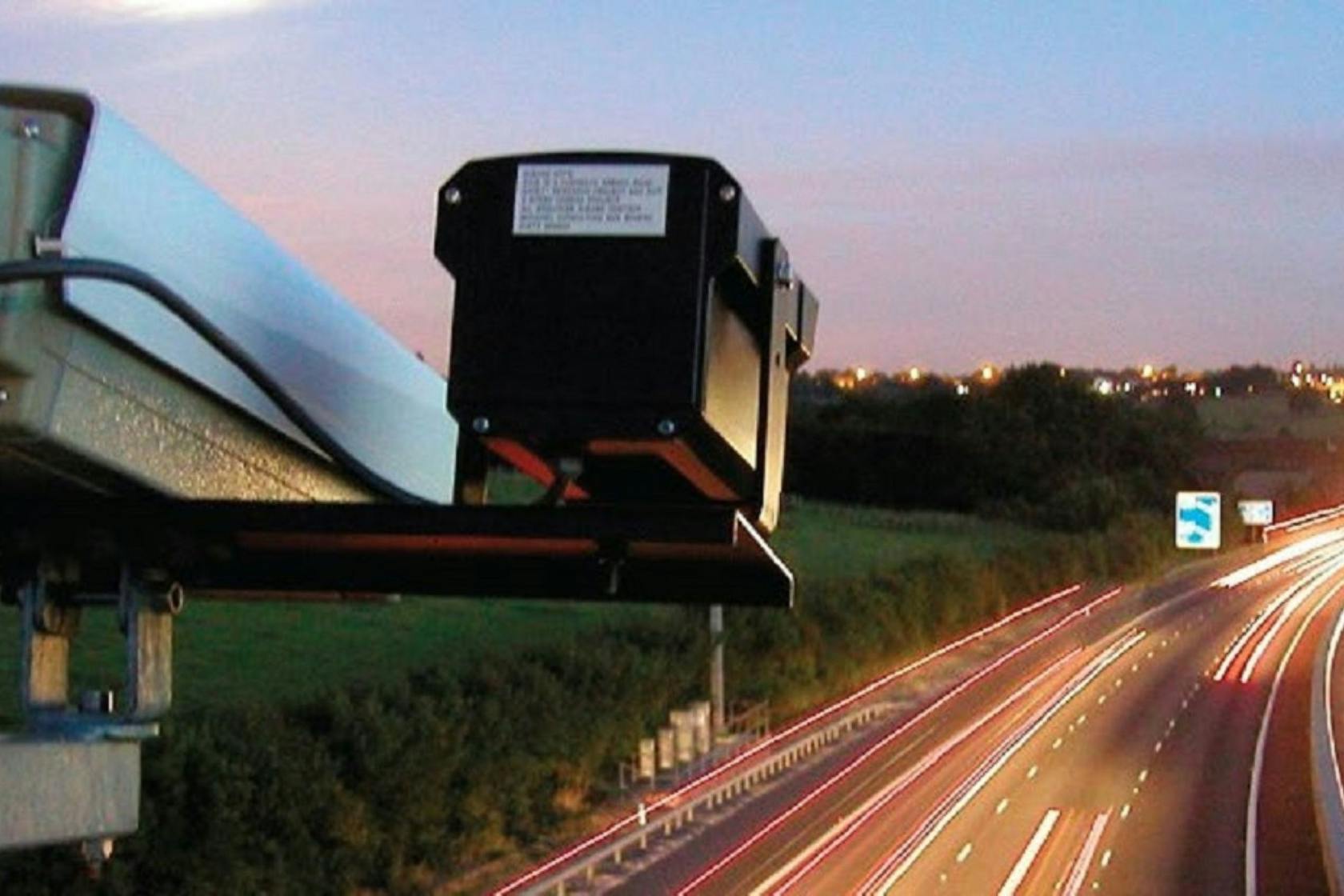
Automatic Number Plate Recognition (ANPR) enforcement in Slovenia
Delivery scope and operational readiness
This case is defined by completeness: highly available infrastructure in two data centres; operation and maintenance of the central, sales, and enforcement systems; delivery of 20 control gantries; outfitting of 33 mobile enforcement vehicles; and provision of portable and hand-held monitoring devices—backed by extensive testing and post‑go‑live support for billing, payments/receivables, call-centre operations, and technical maintenance.
Conclusion
Slovenia’s e‑vignette demonstrates what modern mobility administration looks like when executed with discipline: rapid delivery, citizen-friendly access, and enforcement that is credible because it is data-driven and operationally supported. For ministries and road authorities, the lesson is straightforward—transformations succeed when the provider can design, build, and operate the full service, end-to-end, with integrity and continuity at its core.