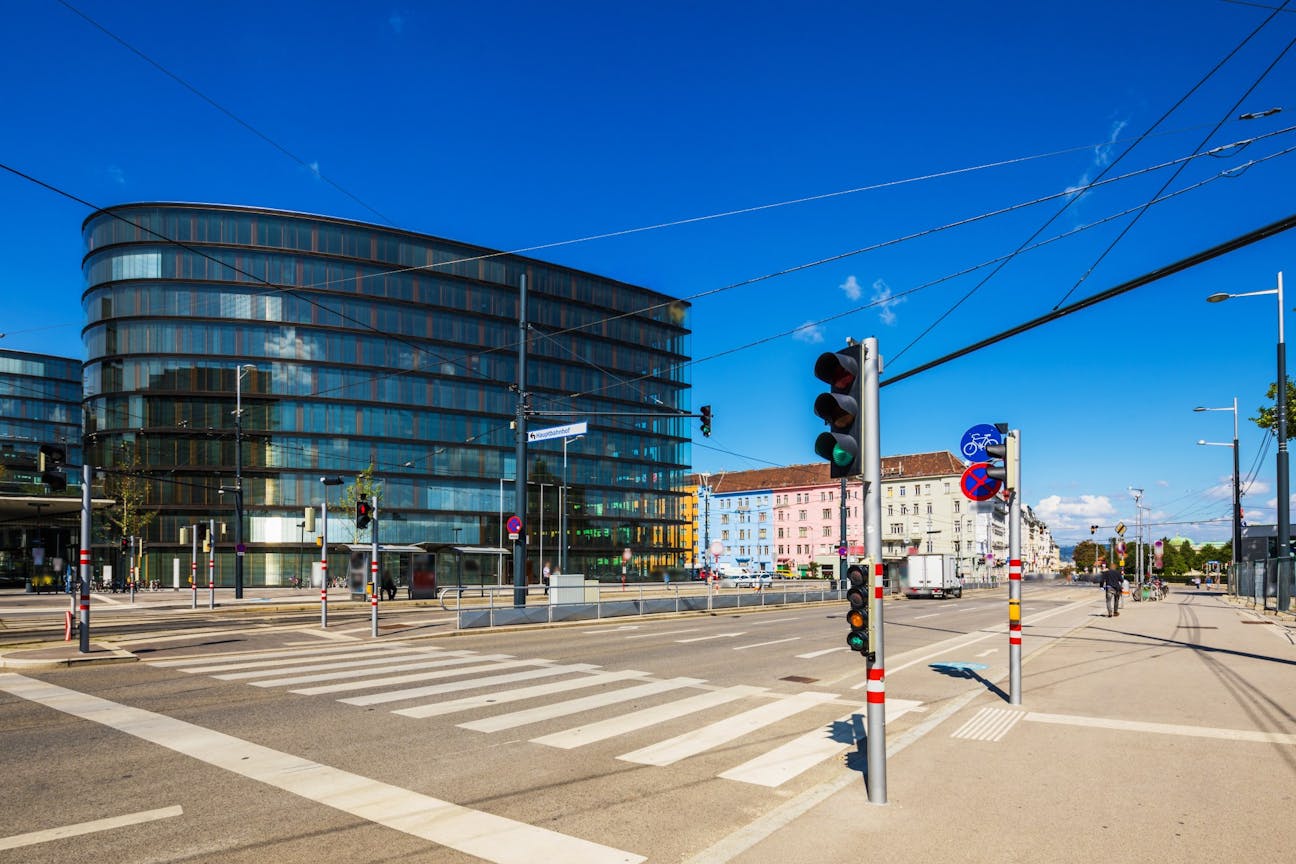
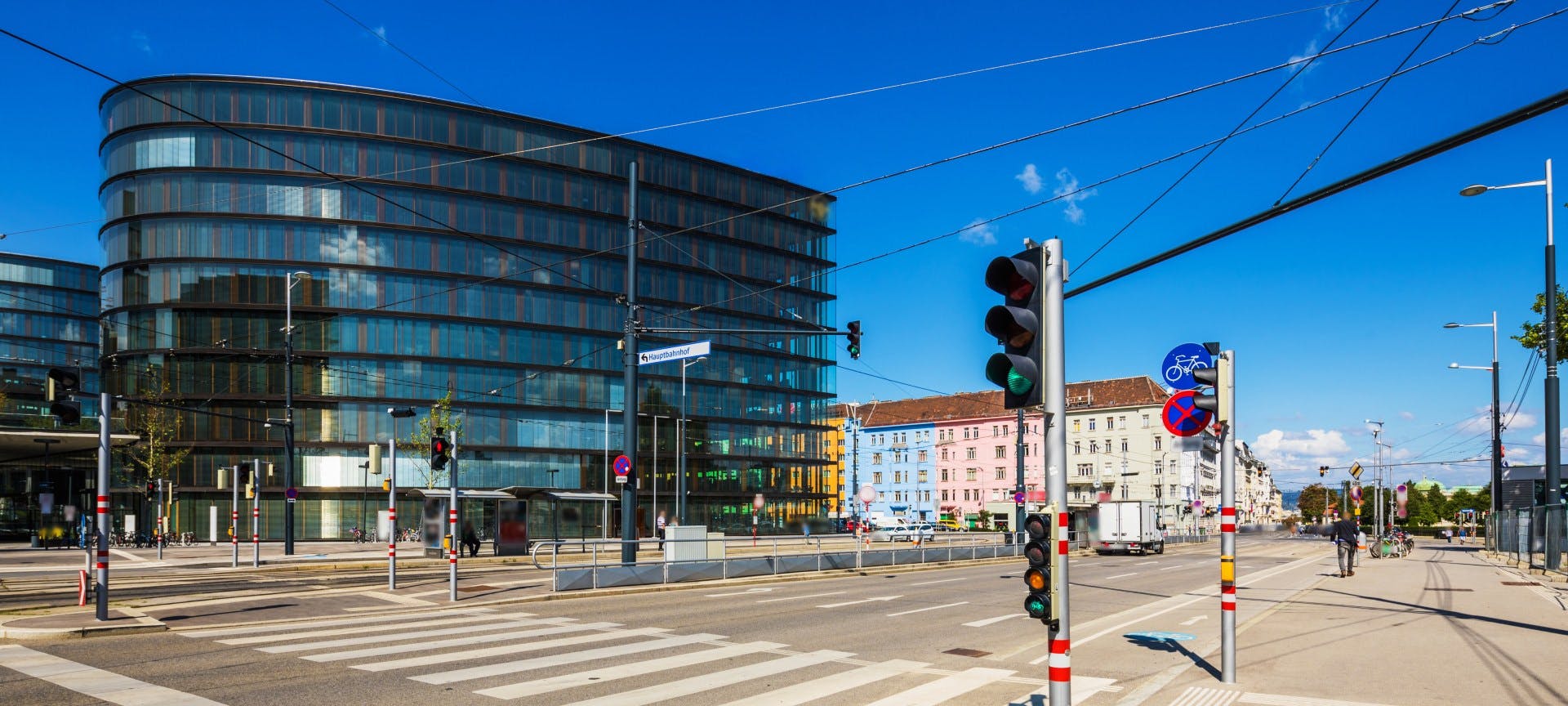
Case StudyIntersection Safety in Austria
Intersections are where small rule breaks create outsized harm.
- Measurable impact: deployments achieved 30% fewer red-light violations through targeted, automated monitoring.
- Legally secure and cost-efficient: Austria’s Ministry of the Interior required a solution that is economical and compliant with all legal standards—delivered in partnership with regional police directorates
- Fast rollout without road works: the system installs on existing masts/walls/cantilever arms and avoids road-surface detectors, reducing approvals and construction effort.
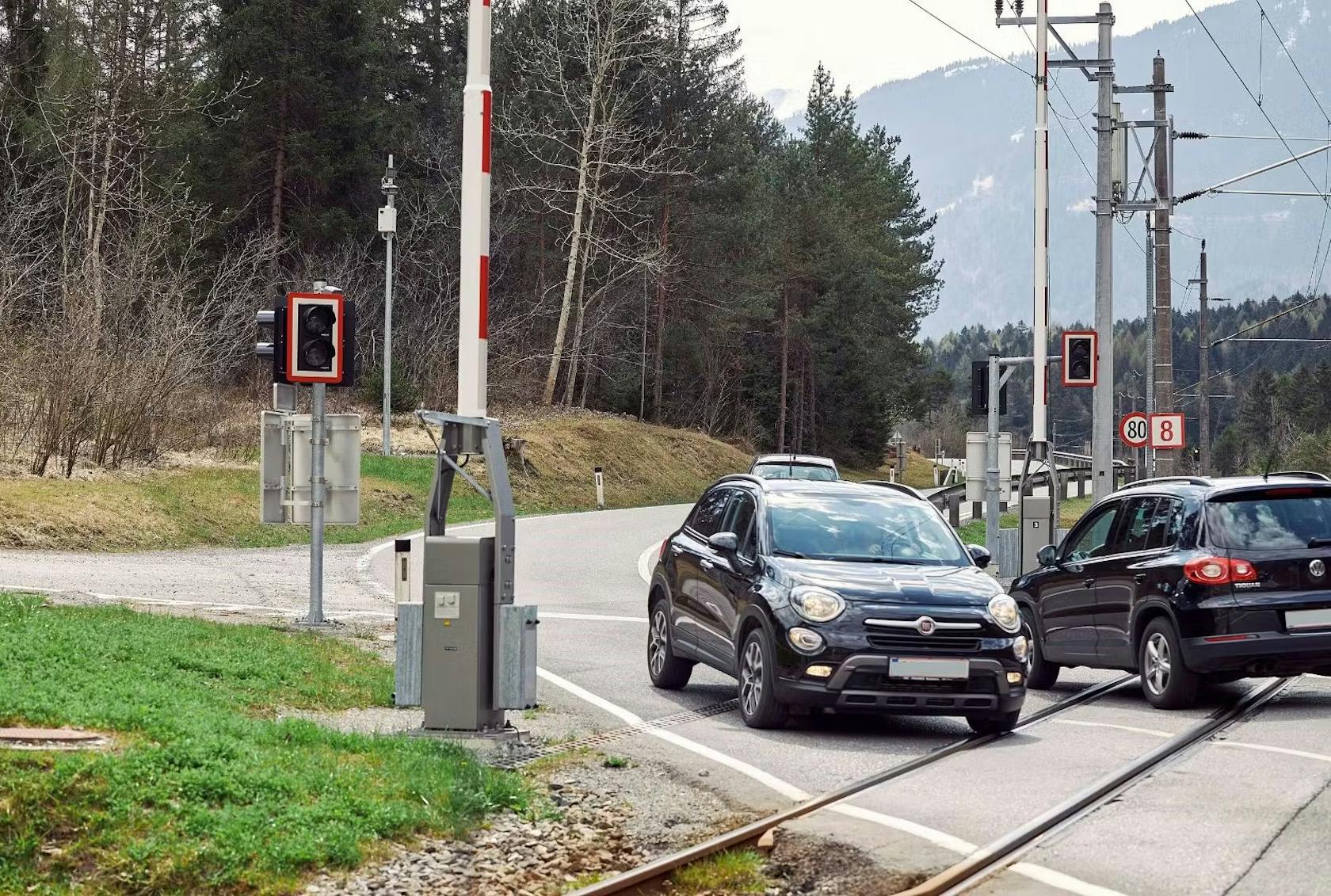
- One solution for road + rail intersections: designed for signal-controlled road and railway crossings, addressing high-risk scenarios where consequences are severe.
Intersections are where small rule breaks create outsized harm. Austria set out to reduce red-light violations at signal-controlled road intersections and railway crossings - while keeping the program legally robust and financially viable beyond dense urban hotspots. The Austrian Ministry of the Interior (BMI) and its police directorates tasked VITRONIC with a solution that would reliably capture violations, remain cost-efficient, and meet legal requirements.
The safety challenge at intersections
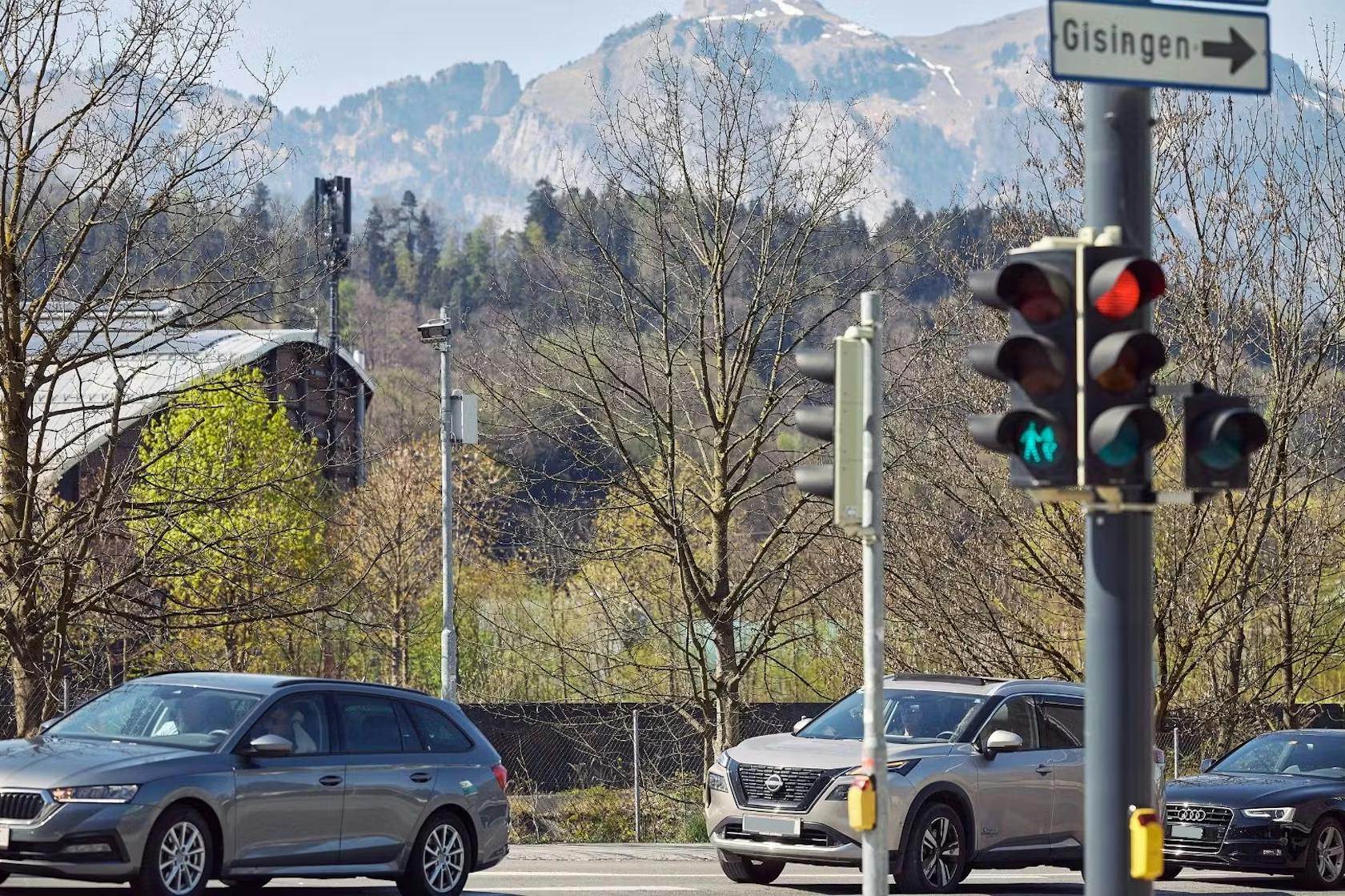
The case study highlights why intersection safety is a strategic priority: violations of priority rules and traffic lights are a major accident driver, and risks intensify where pedestrians, cyclists, and rail traffic intersect. It points to the additional severity at railway crossings, where trains require substantially longer stopping distances, and cites research attributing a large share of collisions at unprotected crossings to red-light violations.
©DarkoTodorovic
The solution: Poliscan Redlight VA
Together with SWARCO Traffic Austria, VITRONIC developed Poliscan Redlight VA, a video-based red-light monitoring system. A feasibility study and pilot phase compared lidar and video approaches; video tracking proved most effective for capturing red-light violations. Since 2019, the solution has been operational at signal-controlled road and rail intersections without requiring additional government approvals, supporting fast scaling.
Implementation approach and enforcement workflow
Traditional red-light monitoring often relies on laser-based systems and roadway modifications. Poliscan Redlight VA removes the need for in-road detectors, enabling quick installation and straightforward relocation—especially valuable for rural areas where budgets are tighter and enforcement must remain efficient. The system supports AI-assisted image analysis, documentation (photo/video), and automated case-data transfer for back-office processing. Optional functions expand coverage to complex behaviors such as crossing stop lines, right turns on red, “blocking the box,” and encroaching on bike/pedestrian crossings—allowing authorities to align enforcement with local safety priorities.
©DarkoTodorovic
Outcomes for ministries and road authorities
The documented results combine preventive effect with operational pragmatism: 30% fewer red-light violations, faster deployment, lower infrastructure investment, and a future-proof pathway through AI-supported analysis capable of handling increasingly complex intersection situations.
Conclusion
Austria’s red-light safety program shows what “smart safety” looks like in practice: measurable behavior change, enforcement that is defensible and efficient, and technology that adapts to both urban and rural realities—without forcing expensive road works. For decision-makers, the key lesson is that intersection safety scales fastest when the solution is designed as a complete, operationally deployable system—from detection and evidence to streamlined case handling.